
WHEN HOME ISN'T SAFE
How to Protect Yourself & Your Children in a Domestic Violence Situation
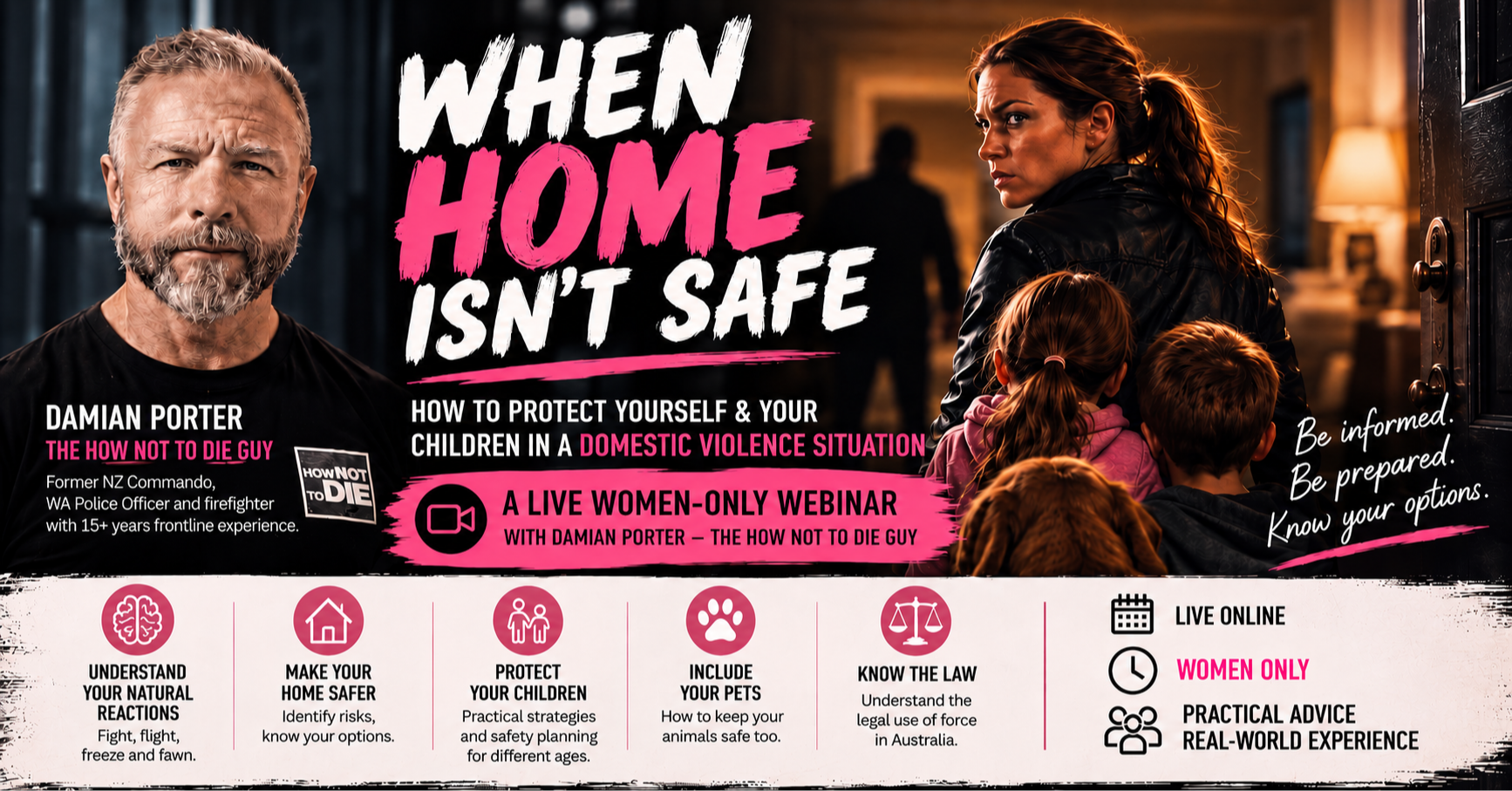
A LIVE WOMEN-ONLY WEBINAR WITH DAMIAN PORTER -
THE “HOW NOT TO DIE GUY”
What would you actually do if someone became violent towards you in your own home?
What if they're bigger and stronger than you?
What if you're trapped in a bedroom?
What if your children are there?
What if your dog won't come with you?
What if you freeze?
What if you fight back - could you be arrested?
These aren't pleasant things to think about.
But the middle of a violent incident isn’t the best time to start figuring them out.

That's why I'm bringing...
Damian Porter - aka The How Not To Die Guy - on a live webinar to chat to us.
Following the success of our recent Women's Self-Defence Workshop, Damian and I are coming together for a live, women-only webinar about surviving violence where women should feel safest: inside their own homes.
This isn't about living in fear.
It's about understanding how humans actually respond under threat, what options may be available to you, and what you can think about and prepare BEFORE you're ever faced with a worst-case situation.

MEET
DAMIAN PORTER
Damian isn't your average self-defence instructor.
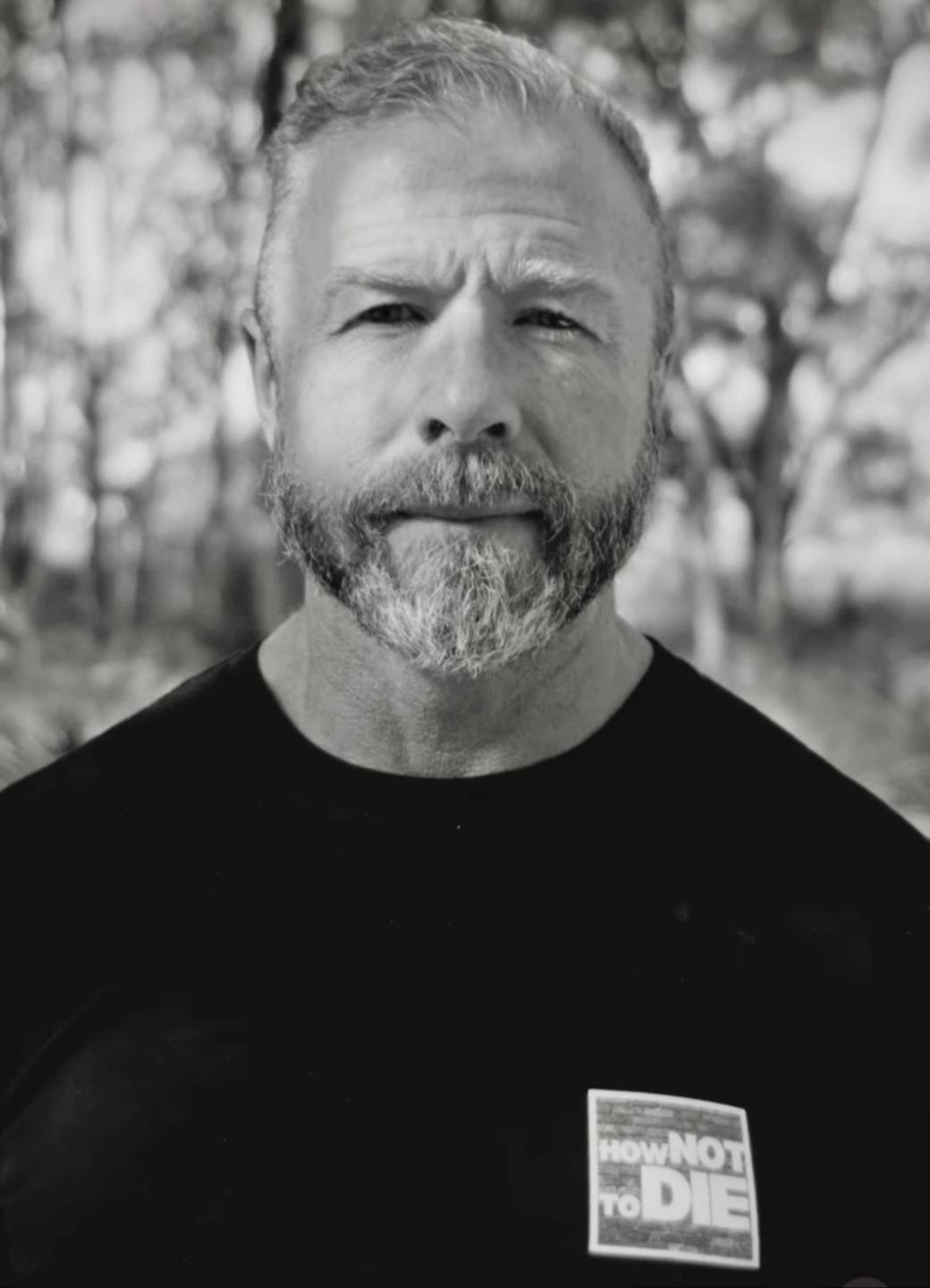
He spent 10 years in the New Zealand Army, including three years as an NZ Commando.
After moving to Western Australia, Damian became a WA Police Officer and later a firefighter, giving him decades of experience in high-pressure and emergency situations.
Through How Not To Die Guy, Damian now shares practical self-protection knowledge designed for ordinary people and real-world situations.
And this time we're taking that conversation inside the home.

00
DAYS
00
HOURS
00
MINS
00
SECS
WHAT WE'RE GOING TO TALK ABOUT
During this live webinar, I'll be putting your real-world questions to Damian about what women can consider when they're faced with violence from somebody they know.
We'll explore:
- Fight, flight, freeze and fawn - what actually happens to your brain and body when you're threatened, and why you may not react the way you imagined you would.
- Recognising escalation - behaviours that may indicate a situation is becoming increasingly dangerous.
- Making your home safer - including rooms and areas that can create additional risks during an assault and thinking about possible escape routes.
- Worst-case self-defence inside the home - what changes when you're dealing with confined spaces and someone bigger or stronger than you.
- Grabs, holds and strangulation - understanding priorities when you need to protect yourself and create an opportunity to escape.
- Being attacked in bed or knocked to the ground - what should your priorities be?
- Children in the home - what can children safely be taught beforehand, code words, calling 000 and what to do if they witness violence.
- When you can't simply "grab the kids and leave" - including situations where children are being used to prevent you from leaving.
- Pets and domestic violence - planning for animals, what to prepare beforehand and what happens when pets are used as a means of control.
- Weapons - what changes when a weapon is involved?
- The lawful use of force - when can you physically defend yourself, and what should women understand about Australian self-defence laws?
- Overcoming the fawn response - when your instinct is to appease the person threatening you rather than fight or run.
- What if fighting back makes things worse?
- What if you can't reach your phone?
- What if you're physically trapped?
- What if the person attacking you knows how to fight?
And importantly...
You'll be able to ask Damian your questions LIVE.
We'll have time for women attending to ask questions about scenarios they're concerned about.
THIS ISN'T ABOUT TEACHING WOMEN TO "STOP" DOMESTIC VIOLENCE
I want to make something very clear.
The person choosing to use violence is responsible for that violence.
We're not going to tell women what they should have done, why they should have left, or pretend there's a self-defence technique that guarantees someone's safety.
There isn't.
Family and domestic violence is complex - particularly when children, animals, finances, housing, coercive control, fear and emotional attachment are involved.
This webinar is about something different:
Giving women more knowledge, more preparation and more options.
Because when your nervous system believes your life is in danger, rational decision-making can become considerably harder.
Having already considered "What would I do?" can matter.
THIS WEBINAR IS FOR YOU IF...
You're currently experiencing domestic or family violence.
You've experienced it previously and want to feel better prepared in the future.
You've worried about how you would protect yourself or your children if a situation became violent.
You tend to freeze or fawn during confrontation and want to understand why.
You want practical information about self-protection without having to become a martial artist.
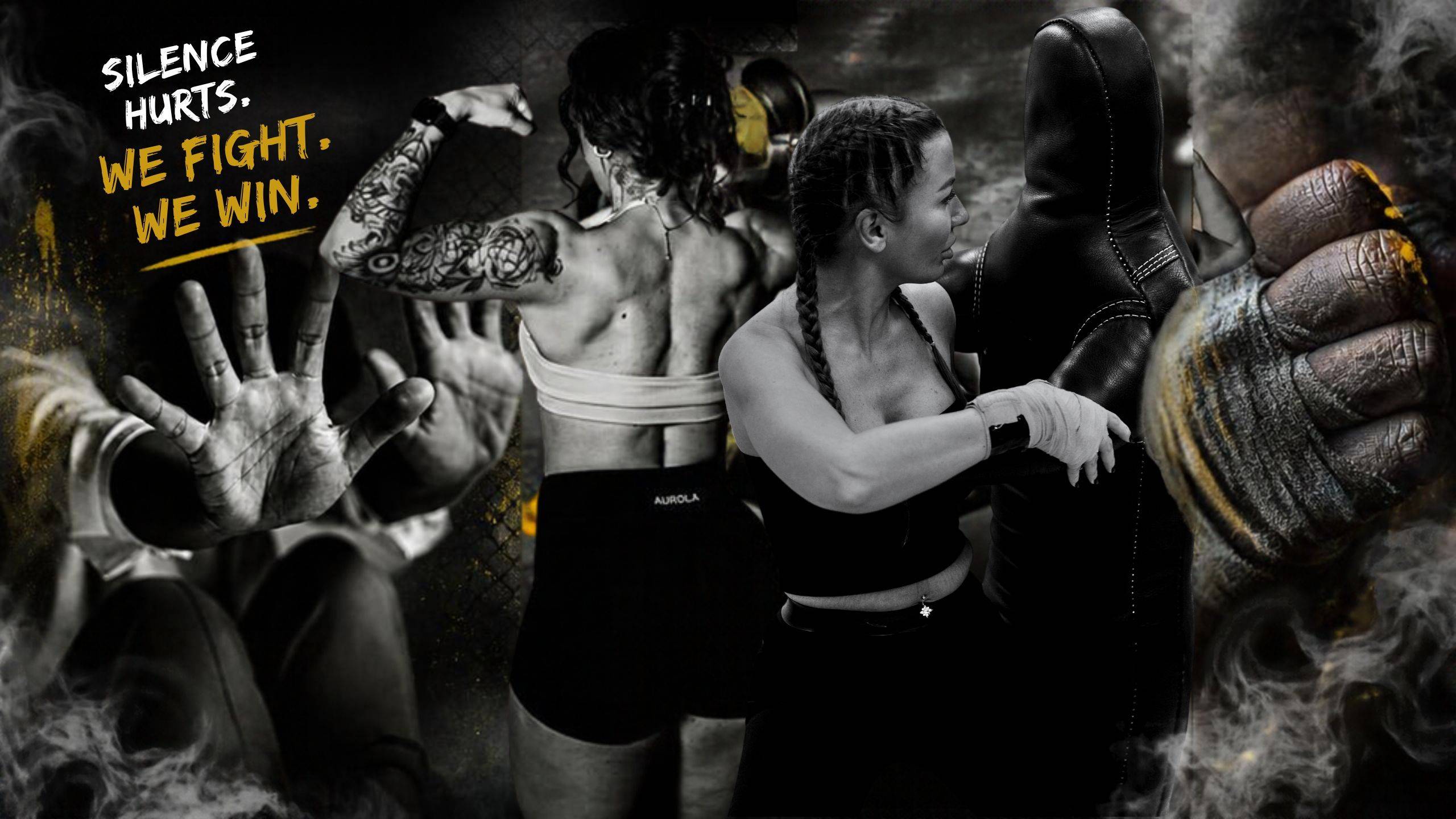
You want practical information about self-protection without having to become a martial artist.
Or perhaps nothing like this has ever happened to you - and you just want to learn stuff you hope you'll never need.
You don't need to share your story.
You don't need to disclose anything.
And you won't be required to participate in any discussion you're uncomfortable with.
You can simply come, listen and learn.

KNOWLEDGE YOU HOPE YOU'LL NEVER NEED.
Hopefully, you will never find yourself needing any of the information in this webinar.
But if you ever do...
that moment shouldn't be the first time you've thought about what you could do.
Be informed. Be prepared. Know your options.

LIVE WEBINAR DETAILS
WHEN HOME ISN'T SAFE
How to Protect Yourself & Your Children in a Domestic Violence Situation

FREE
REGISTER NOW
Places may be limited to protect the privacy and intimacy of the live discussion.
00
DAYS
00
HOURS
00
MINS
00
SECS

IMPORTANT
This webinar provides general educational information about personal safety and self-defence. Every domestic violence situation is different, and attempting to physically resist an attacker can increase danger in some circumstances. Nothing taught or discussed can guarantee personal safety or replace individualised advice from domestic violence professionals, police or emergency services.
If you are in immediate danger in Australia, call 000.
For confidential domestic, family and sexual violence counselling, information and support, contact 1800RESPECT on 1800 737 732 or visit 1800RESPECT.